Teacher’s post-pandemic mission to support indigenous children
During the 2020 pandemic in Argentina, hundreds of thousands of schools closed and moved their activities online. But entire communities were left behind. For those already facing huge barriers in accessing education, the pandemic only made things worse. Many children had no access to a computer, a cellphone, internet or someone to help them with their schoolwork.
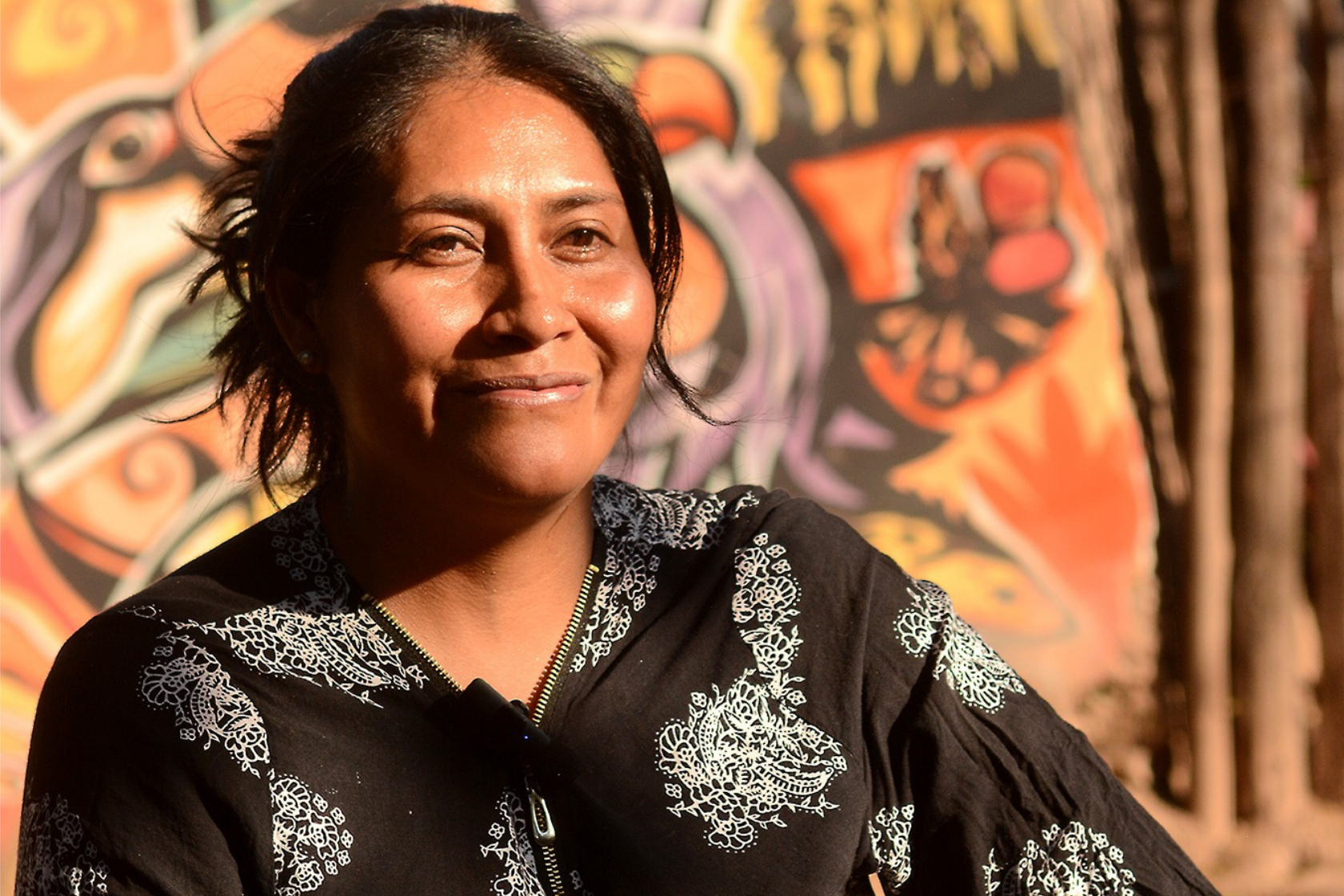
Primary school teacher Silvina Miranda decided to take matters into her own hands. As a member of the Wichí indigenous community of Kilómetro 3 in the province of Salta, she started a project that would support local children with their studies. She named it Matche Ta ïs, which in the Wichí language means “my corner”.
“Many children had no access to a computer, a cellphone, internet or someone to help them with their schoolwork”
“It was a pretty complicated situation that I witnessed,” says Miranda. “I felt that need as a human being to offer myself and provide the children with this space. What worried me the most was the emotional support: we were struggling, we had fears, we were imagining what might happen, I had students who lost their parents.”
The Wichí community is the sixth-largest indigenous group in Argentina. For decades, they have faced multiple challenges, such as extreme poverty, exclusion and significant barriers to accessing education. Many communities are geographically isolated and have no schools nearby. Language is also an issue: the education system is in Spanish, but many children grow up speaking their native tongue at home.
“I felt that need as a human being to offer myself and provide the children with this space”
Another obstacle is the lack of economic resources, with families sometimes forced to choose between eating and buying school supplies. As a consequence, school drop-out rates are high, yet the transition from elementary to middle school is often a critical stage in children’s lives.
It is in this context that spaces like Miranda’s become essential to address these gaps. And far from closing its doors after the pandemic, Matche Ta ïs grew and flourished, and today it welcomes more than 40 students – not only from the Wichí community, but also from other ethnic groups such as the Chorote and Guaraní.
Miranda manages the initiative without receiving a salary. Her only sources of support are individual donations, which are sporadic, and occasional assistance from a provincial ministry which provides food for the weekly tea hour.
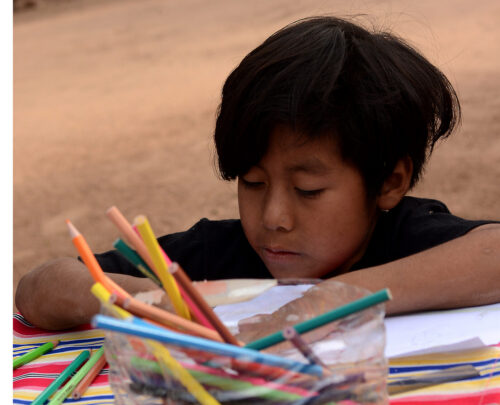
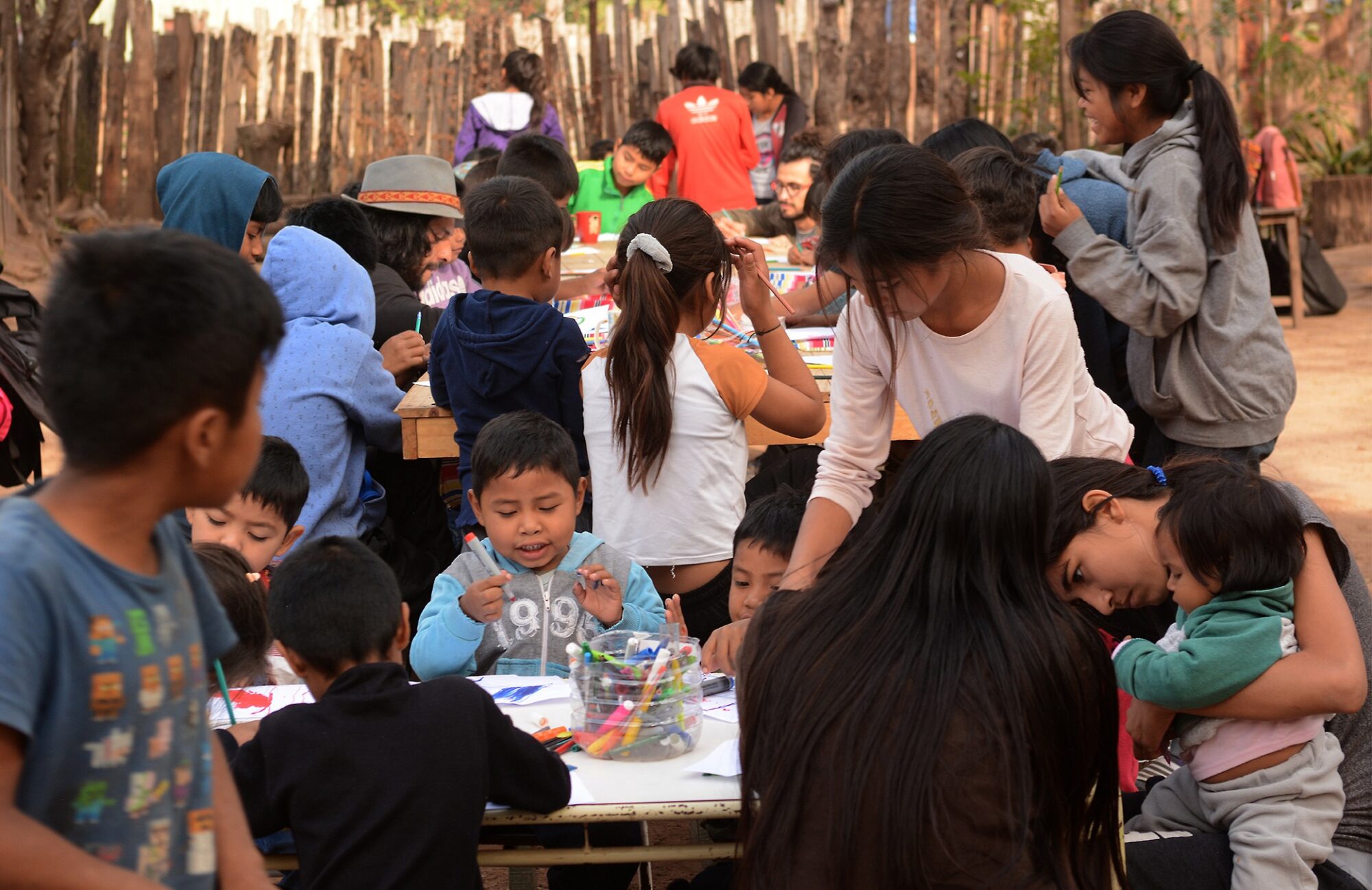
Every Wednesday and Friday afternoon the air is filled with laughter and singing, games and the sound of pencils on paper. The children paint, make crafts with clay and receive help from Miranda with their homework. Sometimes they work in a small room next to her house, which has been refurbished for this purpose, and other times the activities take place outside in her yard.
But beyond recreation and learning, Matche Ta ïs continues to be a vital source of support within the community. Miranda explains: “That is what the ‘little corner’ is all about: this safe space, this place where people are listened to. It is where they feel comfortable saying: I am safe there, I can trust the teacher there, and I will find someone there to help me.”
The existence of Matche Ta ïs takes on special relevance in light of the new risks facing young people in these communities today, which according to reports from UNICEF and local NGOs include; drug addiction, alcoholism, teenage pregnancy, early marriages and a rise in youth suicide.
Alejandro Navia Villanueva, a psychomotor therapist and NGO worker, came across Miranda’s work during the pandemic. He too works closely with children from indigenous communities and recognises it as something rare in the region. “I believe we still need more support systems that reach all communities,” says Villanueva. “Often, the realities of each place and language barriers are not taken into account. And at the same time, young people need spaces where they can see that integrating into the world doesn’t mean losing their identity.”
He highlights that “El Rinconcito” (the Spanish name for Matche Ta ïs) has also become a space for embracing and taking pride in one’s own cultural identity – important in a context where traditions of indigenous peoples are being lost, and children and young people feel ashamed of their ethnic group. “One of the mothers of the children at El Rinconcito , very proudly, told me that thanks to that place not only her son but she herself had come to value her culture and identity once again,” says Villanueva.
“Young people need spaces where they can see that integrating into the world doesn’t mean losing their identity”
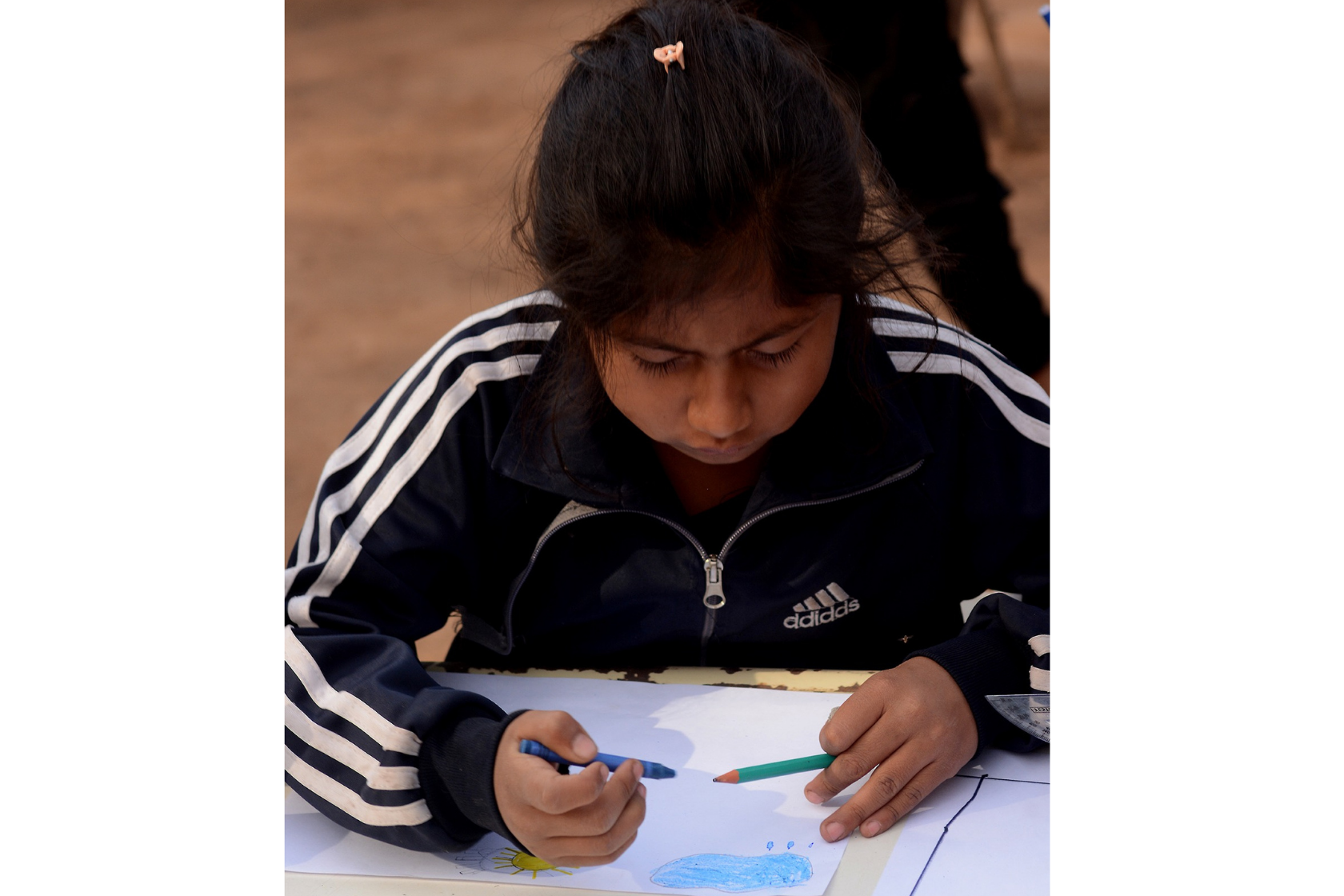
Many children who started at Matche Ta ïs as kids have already finished high school and some are even pursuing further education or university degrees. Villanueva says: “We also need to create spaces where teenagers are invited to dream. And where they too can become role models and leaders.”
That is exactly what Matche Ta ïs represents for many of its students: a place to dream. Julian, eight, wants to be a carpenter, while fifteen-year-old Ever wants to join the military to protect his country. Ten-year-old Damian wants to be a teacher. Thanks to their time at Maché Ta ïs they have the academic, emotional and personal tools to make it happen.
Please note: All photograghs were taken by Gabriel Borndones, as part of AYNi, an independent community art project.