Young mothers return to school but still face challenges
When the 2025 school exam season began, 15-year-old Proscovia Nakiria was no longer attending classes. Five months pregnant, the high-school student in Kumi District, north-eastern Uganda, watched her world shrink. She says some teachers sent her out of class because of her pregnancy, classmates avoided her and her home offered little comfort. As the pressure mounted, she dropped out.
While her place at school disappeared, her determination to learn did not. A friend brought revision papers from another school and Nakiria studied from home for exams she feared she might never sit.
Instead, she passed, with the 12th-best results in her class.
Nakiria’s story reflects a broader issue facing Uganda’s education system. Although government guidelines allow adolescent mothers to return to school after childbirth, many still face significant barriers, including stigma, financial hardship and uncertainty among families and communities about whether a girl should continue their education.
“While her place at school disappeared, her determination to learn did not”
Across Uganda, teenage pregnancy remains a leading cause of school dropout, with UNICEF estimating that 25% of Ugandan girls become pregnant by the age of 19. In response, the Ugandan government introduced revised guidelines for the Prevention and Management of Teenage Pregnancy in School Settings in 2020, establishing Uganda’s school re-entry policy. This allows pregnant learners to take leave during pregnancy and resume their education after childbirth while requiring schools to support their reintegration. But family support, community attitudes and financial circumstances also factor into whether adolescent mothers can return to school and remain there.
For Margaret Abitekaniza, a teacher in Kumi District, the issue is personal. More than a decade ago, she became pregnant while in Primary Seven, aged 12. She remembers being treated differently by her classmates and community.
“There would be a lot of segregation,” she recalls. “School-going children will be like: ‘This one is bad-mannered, we should not associate with her.’”
Despite the stigma, Abitekaniza returned to school, completed her education and today has 10 years of teaching experience. Her past shapes how she helps students facing similar circumstances.
“Abitekaniza returned to school, completed her education and today has 10 years of teaching experience”
In 2024, one of her students became pregnant shortly before exam season. Although many of the girl’s friends distanced themselves from her, Abitekaniza says the more significant challenge came from uncertainty within the family about whether she should continue her education.
Drawing on her own experience, Abitekaniza reassured the student’s parents that education remained possible. “I told them: me, myself, I’m a living example of that very scenario,” she says. The conversations helped change the parents’ perspective and the student returned to school after having her baby.
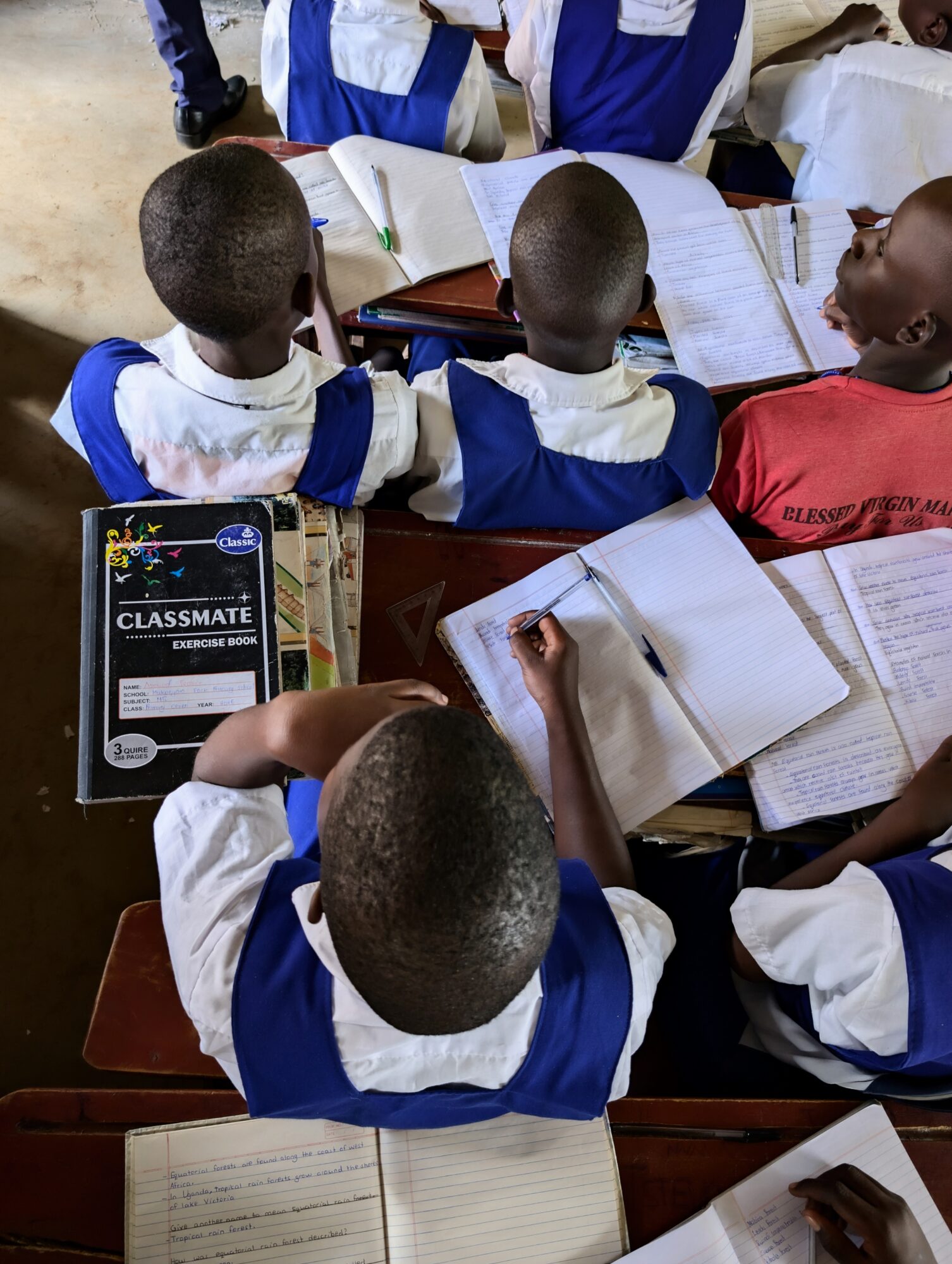
At Mukongoro Rock Primary School, where Abitekaniza teaches, staff have introduced guidance and counselling sessions that focus on teenage pregnancy, education and future aspirations. She says the sessions have helped create a more supportive environment for girls at risk of dropping out.
“The sessions have helped create a more supportive environment for girls at risk of dropping out”
Organisations outside the school system are also working to support adolescent mothers. UNICEF Uganda promotes girls’ education, while organisations such as the Trailblazers Mentoring Foundation, an NGO operating in 23 districts in Uganda, run mentorship and back-to-school initiatives to help young mothers stay in school.
However, Nakiria’s experience shows the challenges that remain. After giving birth, she began selling clothes while caring for her child. The child’s father is absent, leaving her to shoulder the responsibility alone. Although Uganda’s re-entry policy allows adolescent mothers to resume their education, young mothers like Nakiria are left to cover the financial costs of returning to school. One hospital visit for her child used up all the savings Nakiria had set aside to resume her education.
“I wanted to go back to school,” she says. “But the challenge I’m seeing is money.”
“Young mothers like Nakiria are left to cover the financial costs of returning to school”
For Reverend Father Joseph Onyait, a parish priest in Mukongoro, another challenge lies in changing attitudes. Although some assume religious institutions oppose adolescent mothers returning to school, he says the Catholic Church supports girls continuing their education after childbirth and his parish offers counselling for teen mothers.
“The church is not against the children who get pregnant,” he says. “Someone who gets pregnant from school as a teenager can go back to school. It is normal, it’s okay.” However, Reverend Father Onyait also highlights that teenage mothers are often stigmatised because of cultural views and societal expectations of young girls.
The experiences of Nakiria and Abitekaniza demonstrate both the positive impacts and continued weaknesses of Uganda’s school re-entry policy and support for teenage mothers.
Meanwhile, Nakiria continues to care for her child while saving for the future. Although she has the legal right to continue her education, financial pressures and childcare responsibilities continue to stand in the way. Asked what she hopes to become one day, her answer is immediate: “A bank manager or a nurse.”
Successful re-entry depends on more than access to education. Family support, community acceptance, financial stability and practical guidance all influence whether teenage mothers can go back to school and how they shape their futures.