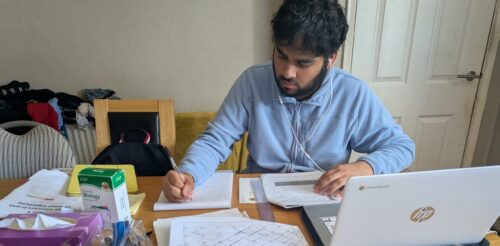
Why today’s exams systems need to change
“If I’m not revising for exams, I feel this panic in my chest, but the panic also stops me focusing on the revision when I try and do it.”
This is a typical worry shared by young people calling Childline, a UK charity focused on children’s safety and well-being. The charity sees “a spike in contacts” at the start of exam season each May, according to Cormac Nolan, Childline’s Service Head.
The students I interviewed described similar anxieties. One from Manchester, who asked not to be named, says after sitting 22 GCSE and nine A-level exam papers she felt “terrified they would not reflect my ability or hard work.” Another, from London, says that few in her family are highly educated and despite them never putting pressure on her, she felt a “self-imposed pressure to make the most of the opportunities” provided to her. Satveer Singh, from Walsall in the West Midlands, says that at his school, exams were a “social currency” that influenced friendships. He describes an incident where everyone’s grades were shared in class, adding: “I lost my friends because they were making fun of me.”
Milly Drinkwater, a schoolteacher in West London, says it is “easy as you get older to forget” how much exams impact teenagers. But the evidence is clear. Research by YoungMinds, a children’s mental health charity, reveals that exams and academic pressure are twice as likely to cause detriment to mental health than social media.
“Exams and academic pressure are twice as likely to cause detriment to mental health than social media”
Their 2025 survey also found that 63% of GCSE and A-level students struggled with their mental health during exams. Half of them had difficulty sleeping, 26% experienced panic attacks and 15% no longer attended school. The majority of young people surveyed believe exams must change for mental health to improve.
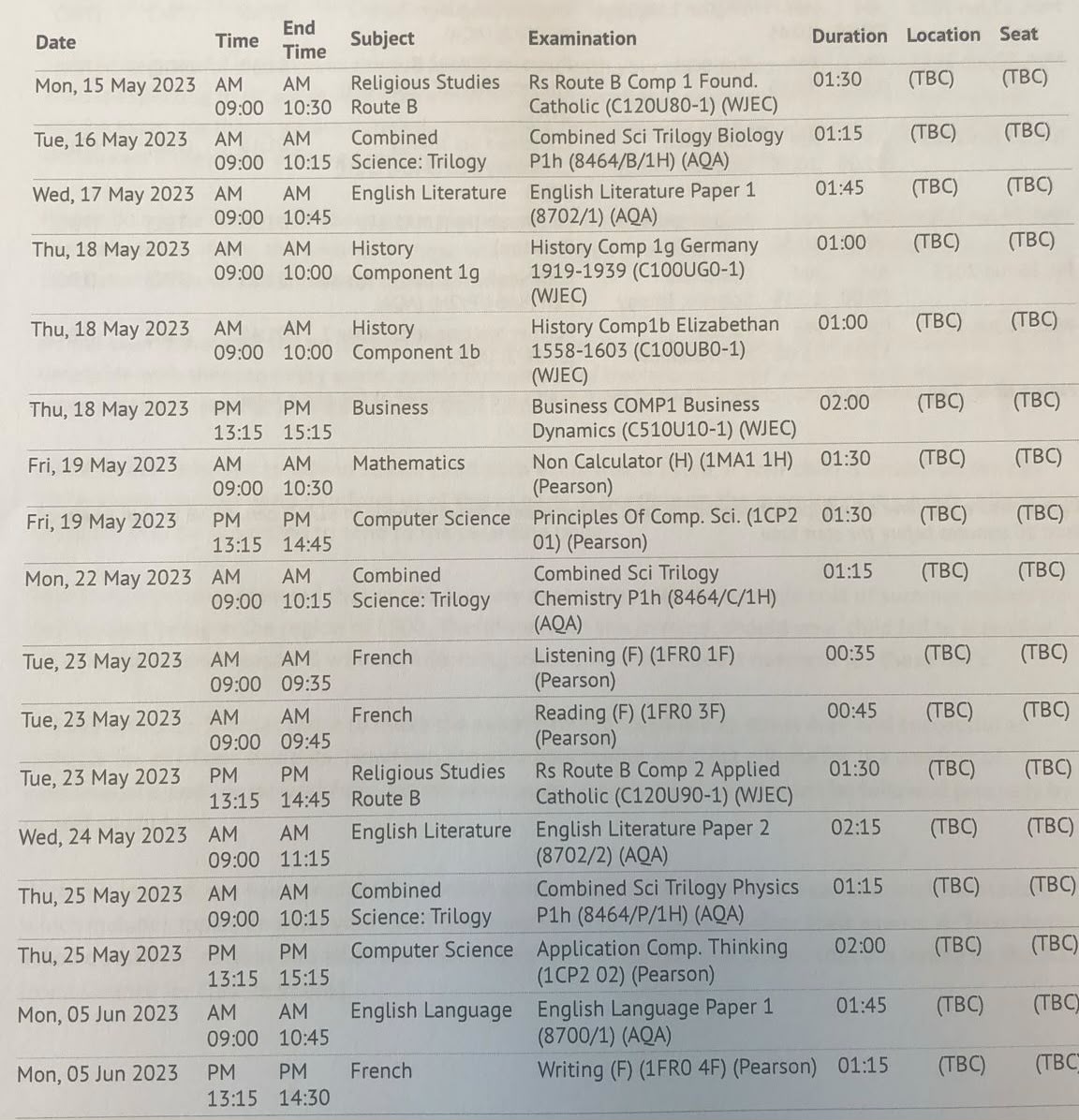
For students, there are two key issues. One is the lack of spacing between exams – in Satveer’s final week of A-levels he had two chemistry papers as well as a biology and a maths paper.
Another issue is how exams are marked. Some students, including Satveer, question overly-specific marking schemes, believing for instance that using a synonym instead of the word specified by examiners will cost you a mark. AQA, the largest exam board in the UK, rejects this premise, however, stating that their questions and marking schemes “cover the range of possible students’ responses.”
“The majority of young people surveyed believe exams must change for mental health to improve”
The government is currently working on changes to exams in England, including reducing time spent in GCSE exams by an average of 2.5 to 3 hours. The Department for Education has also been working on what it calls “once-in-a-generation reforms to post-16 education”, with the introduction of V-levels, Foundation Certificates and Occupational Certificates. Together, these reforms place greater emphasis on vocational learning and moving away from traditional timed exams.
However, some feel this isn’t enough. Students taking GCSEs currently spend an average of 31.5 hours sitting exams. Cutting this by only three hours “falls far short of the changes needed to create a system that supports young people”, says Paul Noblet, head of external affairs and research at YoungMinds.
Milly, having worked with children with Special Educational Needs and Disabilities (SEND), sees the focus on vocational education as a positive thing. Young people with SEND have many different strengths, so this is a significant step towards recognising those skills through formal qualifications. However, she questions how feasible plans are with schools already struggling with shortages of staff, funding and resources.
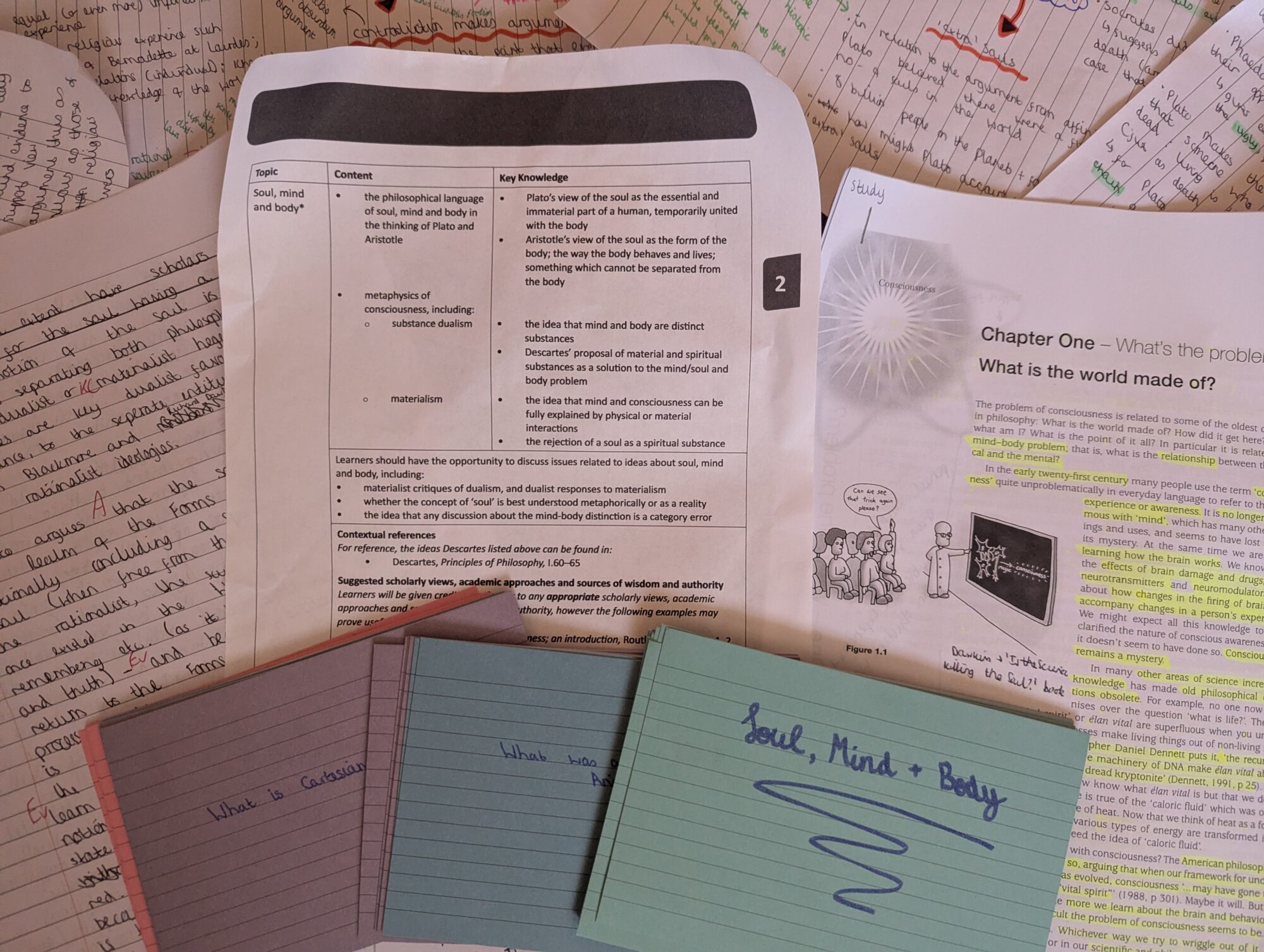
An AQA spokesperson says exams “are a highly effective way of assessing what a student knows, understands and can do.” Exams also provide measurable data. This helps teachers to see where students are struggling, schools to see how they are performing and the government to monitor schools. This makes it easier to respond to issues. The student from Manchester even credits exams for building useful skills such as “how to succeed under pressure” and “manage my time effectively” – skills she uses today as a law student at Oxford.
Paul says: “We need a shift away from end-of-year exams and towards a system that includes a mix of assessment methods so all young people can learn and thrive.” YoungMinds advocated for mixed assessments in their Missing the Mark campaign, suggesting, for example, open-book exams, modular exams and online exams that students can take at a later date.
Asked whether exam boards could implement more mixed assessment methods, AQA said exams are favoured, but they recognise that certain subjects require other methods of examination, such as music and languages. However, the spokesperson also stated that non-exam assessments have challenges around finding sufficient space, time and staff. Artificial intelligence is another emerging concern, with a growing need to “verify students’ individual work”.
“We need a shift towards a system that includes a mix of assessment methods”
As the debate continues, organisations like Childline are still in demand. Cormac says young people are telling them about losing sleep, the pressure from family and the difficulties of juggling school with other responsibilities. He says Childline is ready to “support any child who may be struggling this exam season.”
Please note: This article was written during the 2024 to 2026 Starmer Labour government.